Typical values, model-dependent. Final specifications are confirmed at quotation.
Formation & grading · 512 ch / cabinet
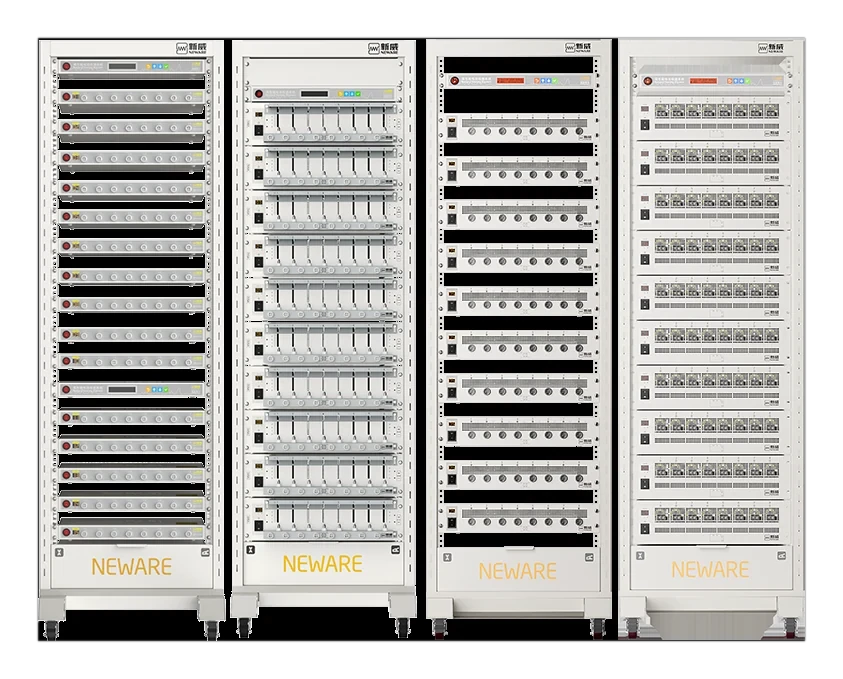
512 channels per cabinet, formation through grading.
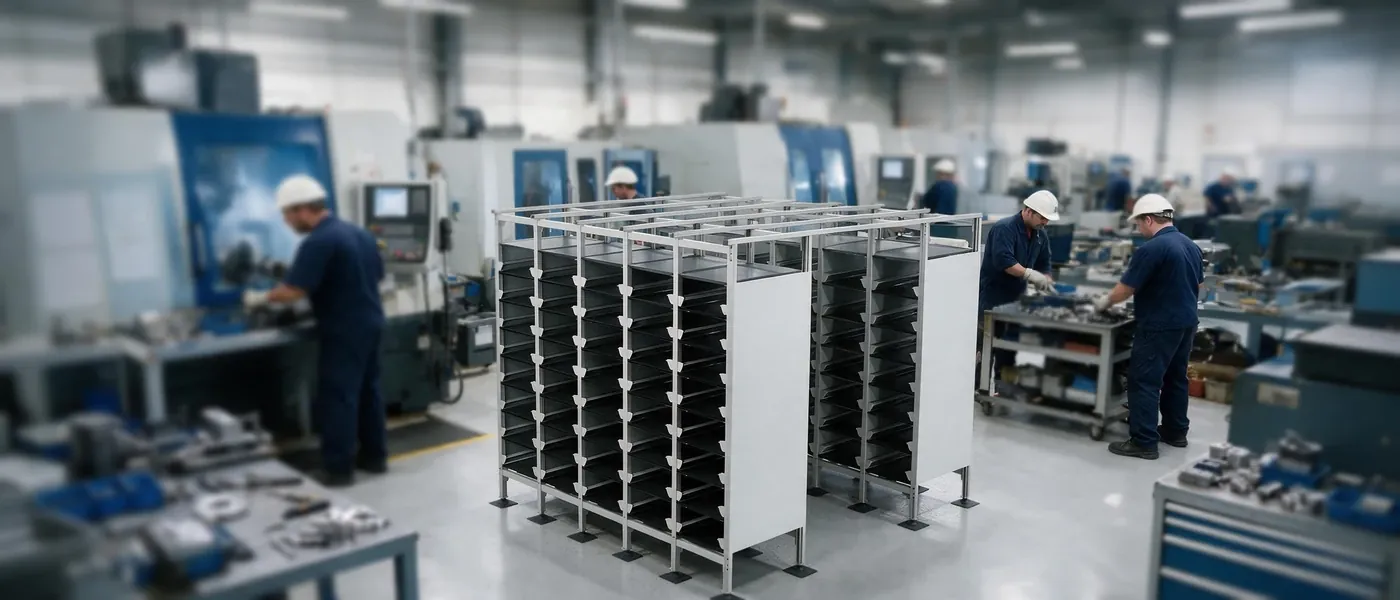
Formation and grading cabinets with 512 channels each, negative-pressure formation and self-discharge screening — built for production, not just the lab.
Measurement accuracy is ±(0.2% RD + 0.2% Range) — typical, model-dependent. Cabinets run formation, self-discharge screening and grading in sequence, with results passed to BTS 9.1 and a LIMS.

Test profiles
What a typical week looks like
Representative profiles for the tests this platform is bought to run. Rates are C-rates; durations are typical and depend on cell capacity, cooling and limits.
| Test | Typical profile | Rate | Duration |
|---|---|---|---|
| Formation | 0.05–0.2C first charge at 25 °C | 0.05–0.2C | 8–24 h |
| Grading | 0.5C capacity, OCV and IR sort | 0.5C | 4–6 h |
| Cycle | 1C/1C at 25 °C | 1C | 500–2,000 cycles |
| DCIR | 10 s pulse plus OCV relaxation | 1C | 2–5 min / cell |
Profiles are illustrative and must be validated for the specific cell and fixture. Final parameters are agreed at quotation.
Specifications
Built around the cabinet
Channel density, formation mode and grading outputs are defined per cabinet, so the line scales by adding cabinets rather than rebuilding the process.
Typical, model-dependent. Cabinet count, fixtures and handling are confirmed at quotation.
How it works
One cabinet, one channel map
Every channel is addressed individually for formation, screening and grading. Results roll up from cell to module to pack for traceability.
-
Formation
First charge under a controlled recipe. Negative-pressure formation is configured where the cell format requires it.
-
Rest and screen
Cells rest for a defined period; voltage retention is measured against grade limits to flag self-discharge outliers.
-
Grade
Capacity, resistance and retention results are combined into a grade. Sorting rules are agreed with your process team.
-
Trace
Per-cell records roll up to module and pack, with an audit trail and LIMS-friendly export from BTS 9.1.
Sequence is illustrative; recipe steps, rest times and limits are defined per project.
Classes by function
All classes use the same 512-channel cabinet platform. Choose the formation and screening steps the line needs.
| Model (class) | Channels / cabinet | Accuracy | Formation | Screening | Sorting |
|---|---|---|---|---|---|
| Formation class (512 ch) | 512 | ±(0.2% RD + 0.2% Range) | Negative-pressure | — | — |
| Grading class (512 ch) | 512 | ±(0.2% RD + 0.2% Range) | — | Self-discharge | Grading |
| Combined class (512 ch) | 512 | ±(0.2% RD + 0.2% Range) | Negative-pressure | Self-discharge | Grading |
Tiers are indicative. Accuracy is typical, model-dependent. Part numbers are confirmed at quotation.
What a line installation includes
A formation hall is a materials-handling system as much as a test system. These are the elements configured together.
| Element | Typical specification | Notes |
|---|---|---|
| Cabinets | 512 channels per cabinet | Line capacity scales by cabinet count, not by re-engineering the process. |
| Channel current | Class-dependent, typically mA to tens of A | Matched to cell capacity and formation recipe. |
| Fixtures | Trays, clamps and negative-pressure interface | Defined by cell format and handling automation. |
| Handling | Manual trays or AGV / conveyor interface | Layout and interfaces agreed with the line integrator. |
| Software | BTS 9.1 with grading rules | Recipes, limits, grade assignment and audit trail. |
| Data | LIMS-friendly export | Per-cell records linked to module and pack serials. |
| Calibration | CNAS calibration available | Schedule agreed around production windows. |
Illustrative configuration. Cabinet count, fixtures, handling and data integration are confirmed at quotation.
What a formation line does not do
Production equipment has process boundaries. Knowing them early avoids a costly integration surprise.
- It does not design the formation recipe. Recipe development stays with your cell team; the cabinet executes and records it.
- It does not handle cells mechanically unless a handling interface is quoted. Trays and AGV interfaces are project-specific.
- It does not certify cell safety. Formation and grading are process steps, not regulatory approval.
- It does not guarantee a grade without agreed limits. Grading rules must be defined and validated by your process team.
- It does not replace a LIMS. It exports to one; master data and retention policy stay in your system.
- Channel accuracy is typical and model-dependent. Confirm uncertainty for the exact class before setting limits.
Formation and grading documentation
The channel-level datasheets below describe the measurement platform. Cabinet integration, fixtures and handling are specified per line; cabinet-level datasheets are written to the line configuration and are not published here.
Planning the line
How many cabinets does my line need?
Start from cells per shift and the dwell time of each formation step, then divide by 512 channels per cabinet. Add headroom for retests and maintenance. Cabinet counts and fixtures are confirmed at quotation.
When is negative-pressure formation used?
Negative-pressure formation is configured where the cell format and process require it. It is available on formation and combined classes; the fixture and pressure interface are specified per project.
What does self-discharge screening catch?
Screening measures voltage retention over a defined rest period and flags cells outside the grade limits. It is a sorting input only; limits are agreed with your process team.
How does grading data leave the cabinet?
Results are recorded in BTS 9.1 and exported to a LIMS-friendly format. Records are designed for CNAS / ISO 17025-friendly review, with audit trails kept alongside the test data.
Can the line run different cell formats?
Yes, with the appropriate fixtures and recipes. Fixture changes and recipe selection are part of line design; confirm changeover time and tray design with your process team before quotation.
How is calibration scheduled around production?
Calibration is planned in windows agreed with production, cabinet by cabinet, so the line keeps running. Certificates and uncertainty statements are issued per calibrated channel group.
Range, accuracy and sampling
Company-published typical values for the main series. The exact model and option set are confirmed at quotation.
| Series / model | Voltage | Current | Accuracy | Sampling / response | Typical use |
|---|---|---|---|---|---|
| BFGS-9512 — pouch · 512 ch/cabinet | Charge 0–4.3 V (5 V optional); discharge 2.5–5 V | ±2000 mA | ±(0.2% RD + 0.2% Range) | Confirm at quotation | 8.3 kW per cabinet; formation and grading |
| BFGS-8512 — cylindrical · 512 ch/cabinet | Charge 0–4.3 V (5 V optional); discharge 2.5–5 V | ±2000 mA | ±(0.2% RD + 0.2% Range) | Confirm at quotation | 8.3 kW per cabinet; formation and grading |
Values are typical and company-published. Accuracy is stated as % FS unless shown otherwise. Confirm the final model, range and option at quotation.
Plan a formation and grading line
Send cells per shift, the formation recipe and your grading limits. We return a cabinet count, channel map, lead time and data-integration outline. We reply typically within one business day.