Precision without the premium
0.01% FS voltage accuracy, 1000 Hz sampling and ≤100 µs current response. Parameters that sit in the same class as lab-grade imported instruments — at a lower price.
Company
NEWARE designs and manufactures cell, module and pack test systems in Shenzhen — cyclers, environmental chambers, formation and grading cabinets, and the software that runs them.
We build the instruments, the firmware and the test software ourselves. That keeps the accuracy chain short, the service path direct, and the delivery schedule in our own hands.
Channel count is company-reported and typical; specifications vary by model.
Why NEWARE
Same instrument class as the legacy imported brands — with a different supply chain, service model and cost structure.
0.01% FS voltage accuracy, 1000 Hz sampling and ≤100 µs current response. Parameters that sit in the same class as lab-grade imported instruments — at a lower price.
Modular racks, 4-week typical delivery and local calibration and service — instead of the 6–9 month lead times common with legacy imported systems.
90% energy feedback at pack level, a lower per-channel cost, and globally stocked spare parts.
Manufacturing
Engineering, assembly, calibration and software development sit on the same site. Changes to a test profile or a hardware configuration do not wait on a third-party supplier.
Delivery is typical for configured systems and dependent on model, options and order volume. Specify at quotation.
Total cost of ownership
Same instrument class — a different supply chain, service model and cost structure. We let the comparison speak for itself.
Delivery, from order to commissioning
Delivery, from order to commissioning
Production is staged so a fault is found at the step that caused it, not at the customer site. The sequence below is the standard path for a configured system.
Boards, power modules and enclosures are checked against specification and lot records before assembly.
Racks and cabinets are built to the channel plan, with torque, labelling and wiring checks recorded per unit.
Assembled systems run a burn-in cycle to catch early-life failures before calibration.
Channels are calibrated against traceable standards, then exercised across their ranges. Results ship with the instrument.
Quality records are retained with the unit. CNAS calibration certificates are issued for the channels in the calibration scope.
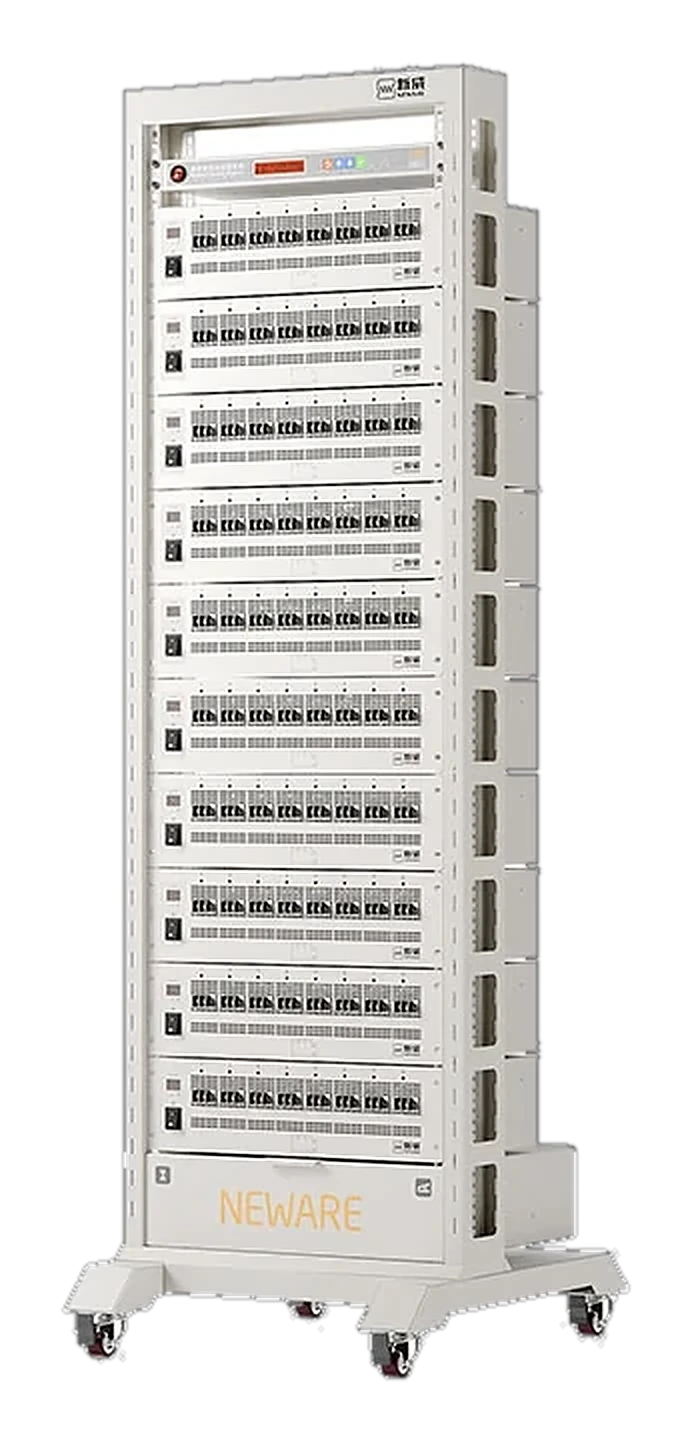
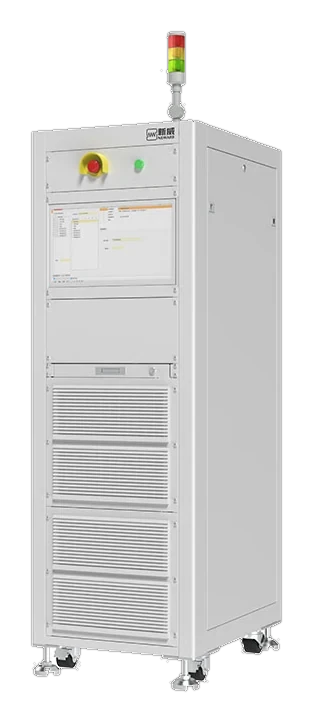
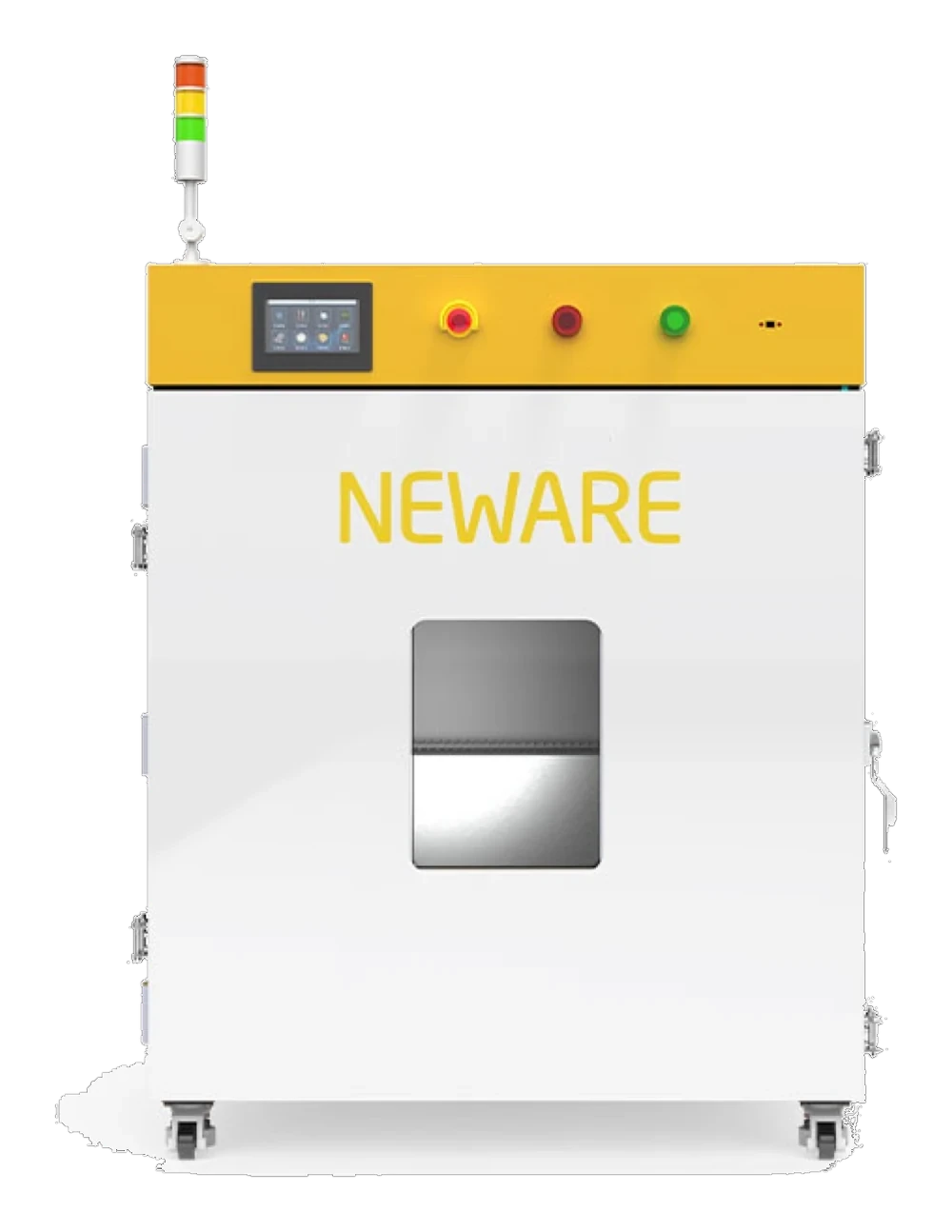
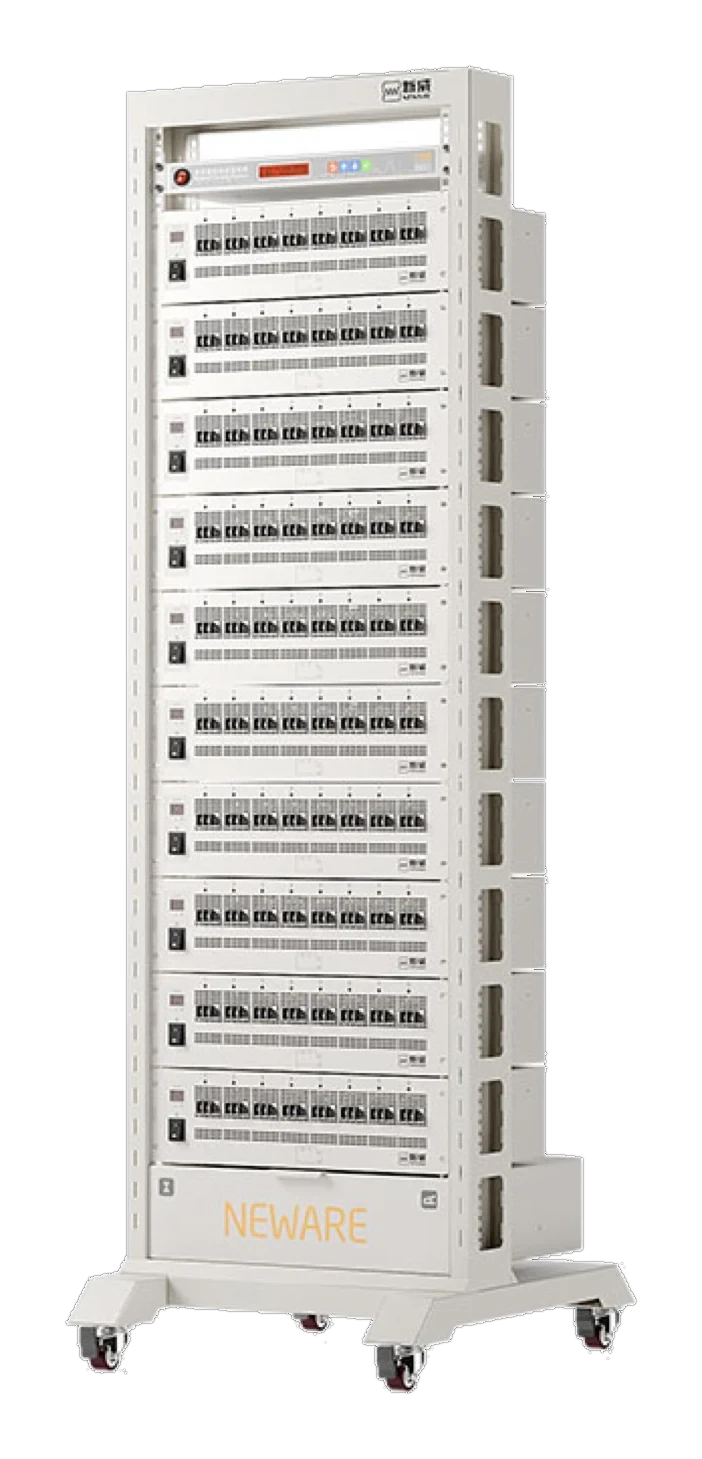
Instrument development is continuous, not a one-off project. Four teams share one engineering record.
Hardware engineering owns the measurement chain: current sources, sense paths, ranging and thermal design. Firmware owns the control loop and the timing that makes a 1000 Hz sample interval repeatable. Software owns BTS 9.1, the data model and the integration interfaces.
Test engineering sits between them, running the same instruments your lab will run. When a specification changes, it is verified on hardware before it appears in a datasheet or a quotation.
More than 25 years of continuous instrument development is the honest way to describe the R&D record. We do not publish a percentage-of-revenue figure, because it would be unverifiable outside our accounts.
Direct sales engineers and authorised service and calibration partners cover the main battery manufacturing and research markets.
Sales engineering, installation support and regional spare-parts stocking for cell, module and pack customers.
Application support, calibration coordination and service partners for automotive and energy-storage programmes.
Closest access to the Shenzhen factory, with fast escalation to the engineering team that built the system.
| Region | Base | Typical coverage | Escalation |
|---|---|---|---|
| Asia-Pacific | Shenzhen, China | Factory engineering, calibration, spares | Direct to the product engineering team. |
| Europe | Regional partners | Sales, installation, calibration coordination | Partner field engineer, then factory. |
| Americas | Regional partners | Sales, installation, regional spare stock | Partner field engineer, then factory. |
Coverage is confirmed for your country at first contact. Response commitments are listed on the contact page.
One product line, extended step by step across the battery test workflow.
Quality management, product compliance and calibration credentials for the systems we ship.
| Credential | What it covers | Document | Status |
|---|---|---|---|
| ISO 9001 | Quality management system for the design and manufacture of battery test systems. | Certificate copy for Shenzhen Neware Electronics Co., Ltd. | With the quotation or on request |
| CE | Applicable product compliance. Scope depends on the configuration and destination market. | Applicable declaration or test evidence for the ordered configuration. | Confirmed at quotation |
| CNAS calibration | Accredited calibration of voltage and current channels in the Shenzhen laboratory, following ISO/IEC 17025. | Calibration certificate and accreditation scope. | Certificate with each calibration; scope on request |
Only credentials we hold are listed. Certificate numbers, issuing bodies and validity dates are shown on the document itself; they are not published here. If a tender requires a certificate that is not listed, ask and we will state plainly whether it applies.
In Shenzhen, China, where hardware, firmware, software, assembly, calibration and final test sit on one site. Regional partners handle sales and service locally but do not manufacture the instruments.
Coverage is delivered through regional sales engineers and authorised service and calibration partners. We do not publish a list of street addresses here; tell us your country and we will name the covering partner and the response path.
No. It is a company-reported count of channels in service, not an audited financial or installed-base statement. Treat it as an indicator of scale, and ask for configuration-specific evidence for a tender.
Factory visits can be arranged through your sales contact, subject to production schedules and visitor requirements. A visit is a good time to review the calibration laboratory and the final-test process in person.
ISO 9001 for quality management, CE for applicable product compliance, and CNAS accreditation for the calibration laboratory. We do not claim other certifications on this site; if a tender requires one, ask and we will state plainly whether it applies.
Performance figures on this site — for example 500,000+ channels in service — are company-reported and typical. They describe our installed base and product capability as we measure them, not a guarantee for any individual configuration. Actual accuracy, throughput and delivery depend on the model, options, test profile and site conditions. Specifications are confirmed at quotation.
When you send an RFQ, we use the details you provide — name, company, contact details and test requirements — to prepare and follow up on your quotation. We do not sell these details. We keep them only as long as needed for the enquiry and any resulting order, and you can ask us to correct or delete them by writing to sales@batteryxlab.com. This summary describes current practice; a formal privacy policy is available on request.
Content on this site is provided for general information. Specifications, availability and delivery times are indicative and are confirmed only in a written quotation or contract. Product images and figures may differ from the delivered configuration. By using the site you accept these basic terms; formal commercial terms are agreed per order.
Four weeks from order to commissioning is typical for a configured system. Larger lines, custom fixtures and chamber integrations take longer; the lead time is confirmed on the quotation.
Voltage accuracy is ±0.01% FS and current accuracy ±0.02% FS on high-precision cell channels — typical, model-dependent. The calibration certificate states the actual uncertainty for the class you order.
Yes. Chamber-only models pair with an existing cycler, and cell channels can run inside a third-party chamber with 3.0 m leads and a cable port. The interface is confirmed before quotation.
No. We do not publish customer names or logos without written authorization. References can be discussed privately where an existing customer agrees.
ISO 9001 for quality management, CE for applicable product compliance and CNAS accreditation for the calibration laboratory. We do not claim certifications we do not hold.
Commissioning, operator training and a calibration schedule. Regional partners handle first-line service and spare parts, with escalation to the Shenzhen engineering team when needed.
Tell us your voltage, current and channel counts. We return a configured proposal with lead time and calibration options — typically within one business day.

Talk to an engineer
Request a quote