Typical values, model-dependent. Final specifications are confirmed at quotation.
Chambers · −70 to +150 °C
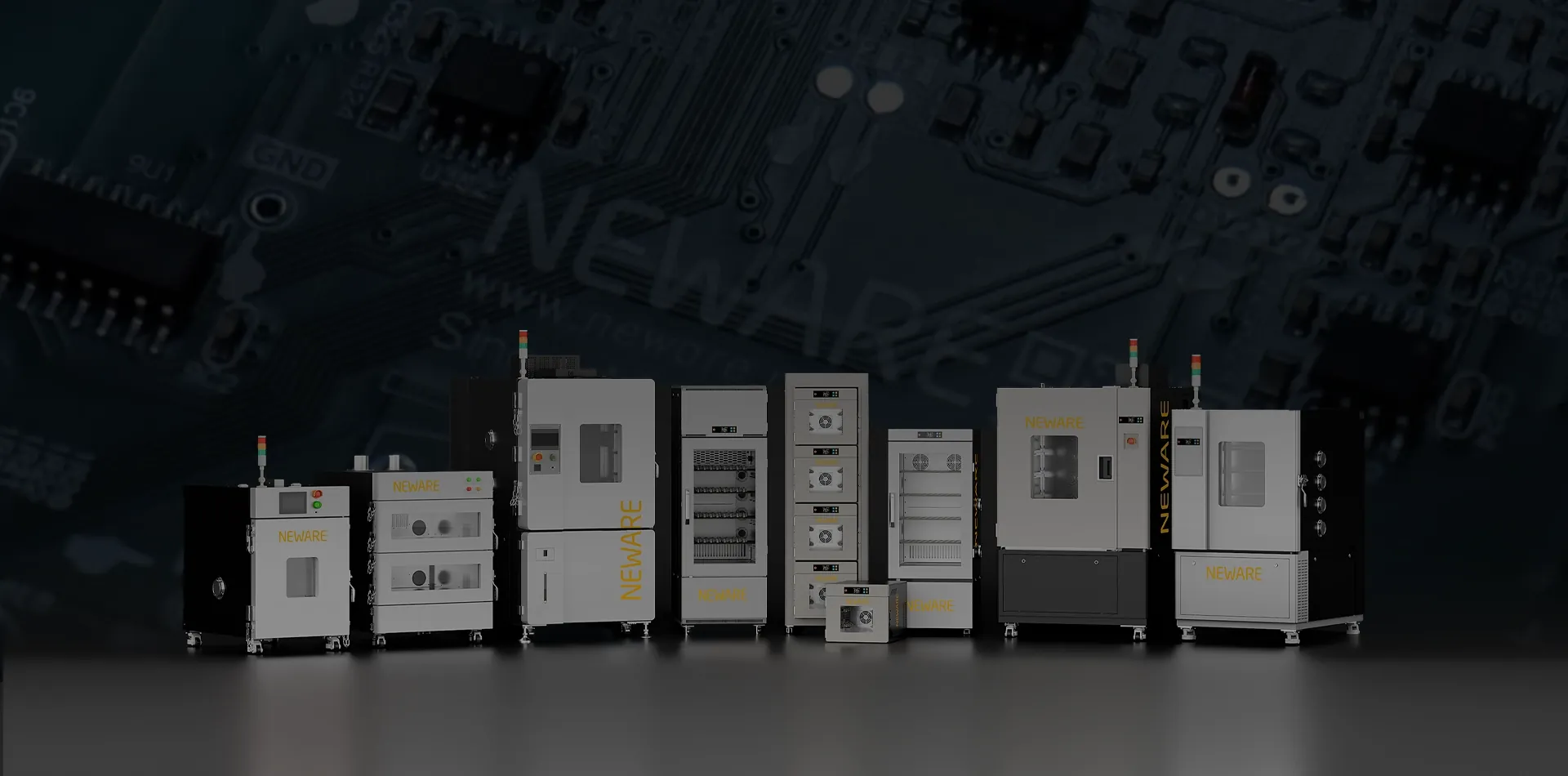
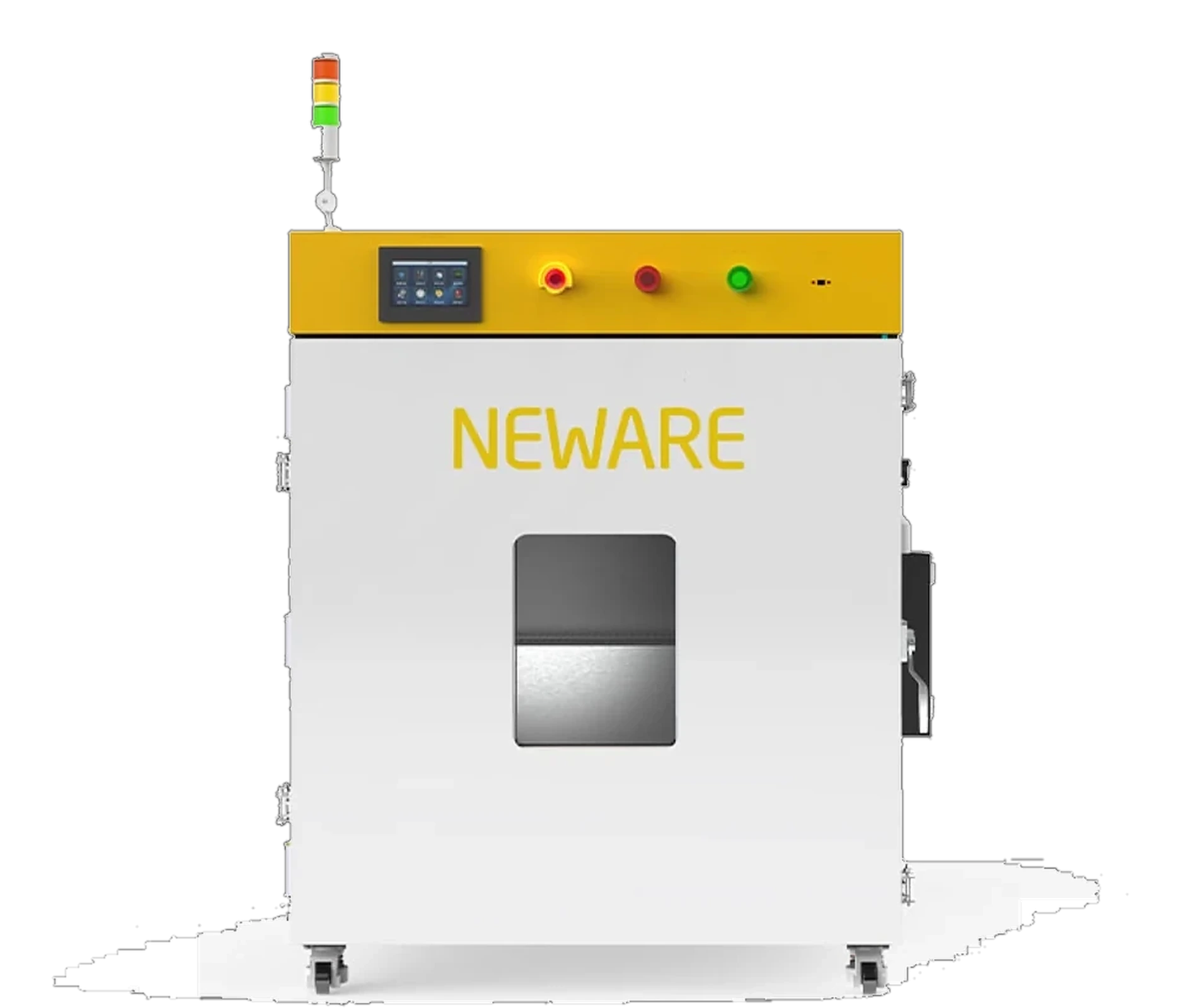
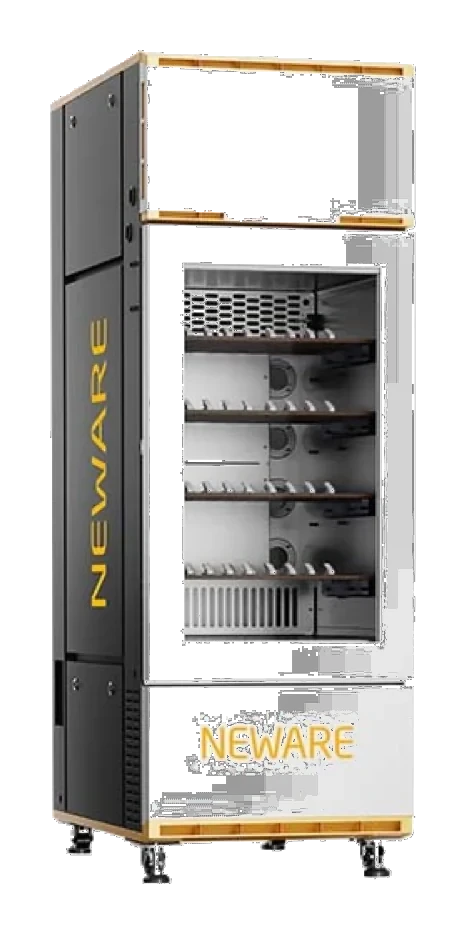
Environmental chambers: climate and cycling in one enclosure.
Chamber-only models from −70 °C to +150 °C, plus All-in-One models at 25 L and 200 L that put the cycler inside the chamber.
Use a chamber-only unit with your existing testers, or an All-in-One system that integrates the cycler and the temperature control under one controller. Multi-zone control is available — typical, model-dependent.


Test profiles
What a typical week looks like
Representative profiles for the tests this platform is bought to run. Rates are C-rates; durations are typical and depend on cell capacity, cooling and limits.
| Test | Typical profile | Rate | Duration |
|---|---|---|---|
| Capacity at temperature | 0.5C at −20 / 25 / 45 °C | 0.5C | 8–12 h |
| Cycle life | 1C/1C at 25 °C ±2 °C | 1C | 1,000+ cycles |
| Thermal cycling | −20 ↔ 60 °C at 1 °C/min | idle or 0.5C | 6–8 h / cycle |
| DCIR vs temperature | 10 s 1C pulse at −20/0/25/45 °C | 1C | ~1 day |
Profiles are illustrative and must be validated for the specific cell and fixture. Final parameters are agreed at quotation.
Specifications
Temperature and test, together
One controller runs the profile and the temperature, so cycling data and chamber conditions share a timeline. Figures are typical and model-dependent.
Typical, model-dependent. Volume, zone count and cycler configuration are confirmed at quotation.
How it works
Cycler inside the chamber
The test electronics sit with the cells, not on a bench outside. Profiles and temperature setpoints are scheduled together in BTS 9.1.
Sequence is illustrative. Chamber conditioning time and safe operating limits are set per installation.
All-in-One and chamber-only classes
Two All-in-One volumes, plus a chamber-only class for labs that already own a cycler. Final volume and zone configuration are set at quotation.
| Model (class) | Temperature range | Volume | Cycler | Control | Typical use |
|---|---|---|---|---|---|
| 25 L All-in-One class | 15 to +60 °C | 25 L | Integrated | Integrated control | Small batches, coin and pouch aging |
| 200 L All-in-One class | 0 to +60 °C | 200 L | Integrated | Integrated control | Larger cell batches |
| Chamber-only class | −70 to +150 °C | Specify at quotation | External | Multi-zone | Pairing with existing cyclers |
Tiers are indicative. Temperature range is typical, model-dependent. Part numbers are confirmed at quotation.
What a chamber installation includes
| Element | Typical specification | Notes |
|---|---|---|
| Chamber volume | 25 L, 200 L or project-specific | Usable volume depends on shelf and fixture layout. |
| Temperature range | −70 to +150 °C | Ramp rates and uniformity are model-dependent. |
| Channel count | Matched to cell count and rack space | Integrated All-in-One or external cycler connection. |
| Fixtures | Pouch clamps, cylindrical holders, prismatic trays | Defined by cell format and terminal geometry. |
| Cable port | Side or rear access | Sized for the bundled sense and power leads. |
| Software | BTS 9.1 temperature + current scheduling | One record, one audit trail. |
Illustrative configuration. Volume, zones, fixtures and cycler interface are confirmed at quotation.
What a chamber does not do
Temperature testing has safety and facility requirements that sit outside the chamber itself.
- It does not make a cell safe. Thermal-runaway propagation testing needs a dedicated safety enclosure, venting and fire suppression.
- It does not provide humidity control on every model. Confirm the humidity range before specifying a damp-heat profile.
- It does not include the building's cooling water, exhaust or power distribution unless explicitly quoted.
- It does not replace a certified calibration laboratory. Chamber sensors are calibrated on site or in a CNAS-accredited laboratory.
- It does not guarantee a ramp rate at full load. Thermal performance depends on load mass and fixture design.
Chamber documentation
Chamber datasheets are configuration-specific: volume, temperature range and cycler interface change the specification. Published model datasheets are listed below; configuration-specific sheets are confirmed at quotation.
- WFB-220-20K.pdf
- WFB-220-2K.pdf
- WFB-500-2K.pdf
- WFB-600-2K.pdf
- WGDW-1000-40-2024.pdf
- WGDW-150-20-2024.pdf
- WGDW-150-40-2024.pdf
- WGDW-225-2-40.pdf
- WGDW-225-40.pdf
- WGDW-225-70-2024.pdf
- WGDW-408-40.pdf
- WHW-25L15C.pdf
- MHW-200-2024.pdf
- MHW-25-16CH.pdf
- MIHW-100-2-160CH-Jade.pdf
- MIHW-200-160CH-Jade.pdf
- MIHW-300-80CH.pdf
- WGDW-380L-2-40-8CH.pdf
Choosing a chamber
All-in-One or chamber only?
Choose All-in-One when you want one controller, one data record and no external cable run between chamber and tester. Choose chamber-only when you already own a cycler and want to add temperature control around it.
25 L or 200 L?
Match volume to the batch you run at once, not to the largest batch you might run someday. 25 L suits bench-scale work and small formats; 200 L suits larger cell batches. Exact usable volume is confirmed at quotation.
What does multi-zone control add?
Multi-zone control lets one chamber hold separately controlled temperature zones, so a single run can cover more than one condition. Zone count and layout are specified per project.
Can I keep my existing cycler?
Chamber-only models pair with an existing cycler. Share the cycler's interface and cabling requirements with your enquiry; the mechanical and electrical interface is confirmed at quotation.
What utilities does a chamber need?
A suitable floor area, electrical supply and ventilation. Water-cooled models also need a cooling-water circuit. The exact utility schedule is issued with the quotation so your facilities team can prepare the site.
How is the chamber calibrated?
Temperature sensors are calibrated against traceable standards, on site or in a CNAS-accredited laboratory. The calibration interval depends on use and your quality system; the certificate and uncertainty statement are issued with each calibration.
Volume and temperature by series
Chamber and all-in-one families, with volume and temperature range. Humidity and custom porting are configured at quotation.
| Series / model | Volume | Temperature range | Configuration | Typical use |
|---|---|---|---|---|
| MHW-25 | 25 L | 15–60 °C | Semiconductor cooling, benchtop | Coin cells and small samples |
| MHW-200 | 200 L | 0–60 °C | Floor-standing | Cell and small-module testing |
| WGDW 150 / 225 / 408 / 800 / 1000 | 150–1000 L | −20 / −40 / −70 to +150 °C | Dual-zone option: 225 L × 2 | Cell, module and pack testing |
| WFB | 11 L × 20 cells | No temperature control | Explosion venting | Safety enclosure for formation |
| WHW-25L / 200L + 4008Q | 25 / 200 L | Temperature-controlled | 16 / 160 channels | Coin-cell all-in-one |
Typical values. Exact volume, temperature range, porting and controller options are confirmed at quotation.
Sensing, fixtures and auxiliary channels
The parts that turn a channel into a repeatable measurement. Specifications are the published typical values.
| Accessory | Specification | Use |
|---|---|---|
| BVIR internal-resistance meter (CR-20V-2000Ω) | 0–20 V; 200 mΩ / 2000 mΩ auto range; 1 kHz, 100 readings/s; four-terminal | Cell and module DCIR |
| AUX voltage / temperature channels | −5 to +5 V ±0.1% FS; NTC −25 to 110 °C; thermocouple −200 to 260 °C, ±1 °C | Reference and ambient monitoring |
| SMT / sense harness | Configured to channel count and fixture layout | Voltage sense and temperature integration |
| Cell fixtures | Pouch clamps and prismatic trays made to the cell format | Repeatable contact and alignment |
| Chamber racks / feedthroughs | Configured to chamber volume and channel count | Lead routing into temperature tests |
Accessory availability and exact specification depend on the tester model and chamber. Confirm with the configuration.
Size a chamber for your cells
Tell us the cell format, batch size and temperature profile. We return a chamber or All-in-One proposal with volume, zone layout, lead time and calibration options. We reply typically within one business day.